It starts with a talk.
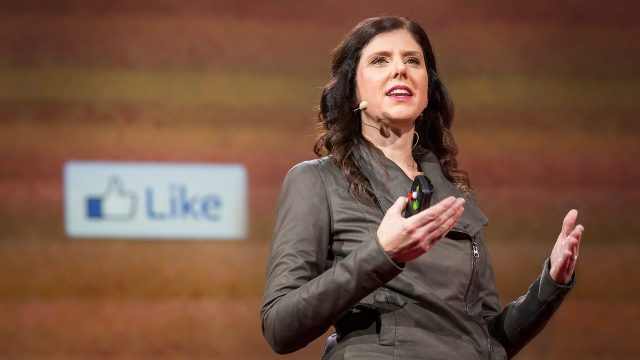
Recently I watched the TED talk ‘How Giant Websites Design for You (and a Billion Others, too)’ from Margaret Gould Stewart, Facebook’s Director of Product Design. This talk touches upon the surface of why the power of User Experience (UX) should never be underestimated. And how the smallest of changes implemented can lead to profound changes in how a product is used on a massive scale. Seemingly minor changes such as a Like/Dislike system can fundamentally change the response to a product in either a positive or negative way, almost unpredictable at first.
Key Takeaways
After watching this talk, I have a few major takeaways I will keep in mind:
- Listen to your audience.
Creating a good product relies on both applying best practices, but having the target audience you are designing for in mind. Talk to them. Engage in the world they are engaging in, as the issues they might have with a product can be very different from the issues you are experiencing. - A product’s nature is to evolve…
Hooking into my previous point, no product is ever fully finished. There are always new pathways to improve on your product, and while a perfect product does not exist – talking and listening to those in the industry and user base only has the potential to improve on what is already there. It is what will get people closest to their end goal of an ultimate offering. - …but not to dissolve into chaos
The smallest changes like a button color can have large effects on usability and user behaviour for better or worse. Designers and developers alike should be very careful with changes implemented not too disturb current users too much. The cognitive load of users on your product should be light at all times, not for first-time visitors but also for those who are familiar with the product already. A giant redesign? Not always an improvement, even if it is in the long run. A phased approach might prove better. - (Small) size matters
Even the smallest details are important for creating a well-built experience for people to use. What a time to be alive as a perfectionist! - Humans + Data = Great results
Designing for the human need and experience is much more important than the usual ‘data-driven’ approach, which is often misunderstood. As Margaret best explained it:
“Data can help you make a good design great, but it will never make a bad design good.”
So what does this mean?
These learnings can be applied to my own work both in commercial and personal context throughout the year. For example, I usually take analytical data from current websites to see what their target audience is in terms of devices used to view the site. However, apart from the newest iPhone and latest laptops, I should also focus on optimizing the experience for the older smartphones if the website is for an elderly home. I should take into account the target audience as well as the gathered data to land at a well-rounded conclusion and plan of approach.
I already spend quite the amount of time getting to know the audience before starting a project. When a client tells me they know what they need, I ask them if that is also something that their clients need. Because those needs between owner and user are usually quite different. I am designing for the user, not for the one who has to pay for it, even though that is usually what beginning freelancers do to satisfy the job description. It does not necessarily offer value.
The aspect of not changing too much does not apply to my work in most cases, as the projects are fully redesigned to begin with and are not a small iteration to improve specific use cases. This does not mean the concept does not apply to me. A/B Testing is a way in which testing on a smaller group of people for effectiveness can help make my future products better, while not disturbing the rest. It has been a subtle way to test out features for years, and is a method I should definitely be applying to my work this year.
Watch the TED Talk yourself here: